
-Proud of Our Roots, Building Our Future
Situated along the Mississippi River in northeast Missouri, Louisiana is a small town with a remarkably rich story—one that began before Missouri became a state and continues to be written today.
Louisiana was founded in 1816 by John Walter Basye and named for his daughter, Louisiana Basye. Five years later, Missouri entered the Union. From its earliest days, the Mississippi River helped shape the community, establishing Louisiana as an important shipping and commercial center and leaving behind an architectural legacy that remains one of our town’s most visible treasures.
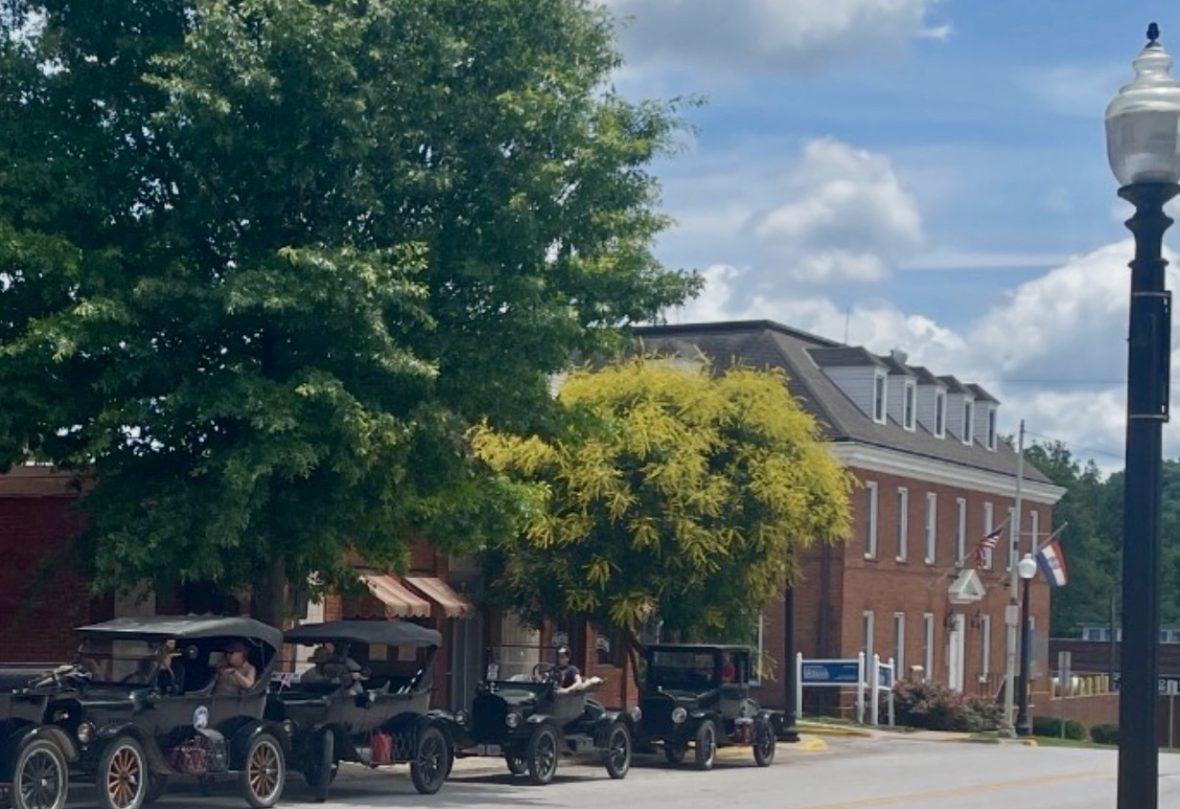
Today, Louisiana’s history is not tucked away in a museum—it surrounds us. Our community is known for its impressive antebellum homes, many still standing and occupied, and for a historic downtown that reflects generations of commerce and community life. The Georgia Street Historic District encompasses 55 buildings developed between 1845 and 1935, including the Odd Fellows Lodge, U.S. Post Office and Masonic Temple. Many downtown buildings retain their distinctive Mesker cast-iron storefronts. The Missouri Department of Natural Resources has described Louisiana as having “the most intact Victorian streetscape in all of Missouri.”
But Louisiana’s story is about more than preserving the past. We believe our history is an asset upon which to build our future.
That belief is especially evident today as community leaders, businesses, organizations and residents are coming together to look seriously at the next chapter for Louisiana. The City and Chamber of Commerce are exploring opportunities for downtown revitalization, economic development and historic preservation, including participation in Missouri’s new Innovation Zone program and renewed involvement with the Main Street approach to downtown development.
These efforts represent more than another improvement project. They are part of a broader vision: strengthening our historic downtown, attracting private investment, encouraging rehabilitation of underused buildings, developing additional housing—including opportunities for upper-story residential development—and creating an environment where existing businesses can succeed and new businesses can take root.
Louisiana understands that meaningful revitalization cannot belong to one organization alone. The goal is to bring together the City, Chamber of Commerce, civic organizations, churches, businesses, property owners, schools, volunteers and residents around a shared vision. Instead of each group working independently, we are working toward a model in which community organizations become partners in Louisiana’s future.
Our community has already demonstrated that we can work together. Local organizations and volunteers support our schools, parks, food programs, youth activities, community events, beautification projects and families in need. Much of what gets accomplished in Louisiana happens because someone sees a need, gathers a few people together and gets to work.
At the same time, Louisiana is taking a more deliberate look at its long-term future. Our recently completed comprehensive planning process identifies community assets as well as challenges involving infrastructure, housing, economic development and the preservation and productive use of our historic resources. Rather than ignoring those challenges, we are beginning to ask a more important question: How can the qualities that make Louisiana distinctive become the foundation for its renewal?
Art and creativity are already an important part of that answer.
Louisiana is part of the 50 Miles of Art corridor connecting Louisiana, Clarksville and Hannibal and is home to talented artists, craftspeople and artisans. Just north of town, the 350-acre Henry Lay Sculpture Park combines art with the natural beauty of the Mississippi River region. Walking trails wind among impressive large-scale sculptures and include places to rest and enjoy the landscape, a historic cemetery and a children’s playground.
Within the city itself, art has become part of our identity. Known as The Mural City, Louisiana has more than two dozen hand-painted, building-sized murals. They brighten our streets, preserve pieces of our history and turn a walk through town into an outdoor art experience.
That creative spirit comes alive each October during ColorFest, a Louisiana tradition dating to 1984. Held on the third weekend of October, the festival brings arts, crafts, food, entertainment and visitors into the heart of the community. At its height, ColorFest has attracted thousands of visitors—an impressive accomplishment for a community of approximately 3,000 people.
Louisiana also knows how to have a little fun with its heritage. Since the early 1970s, stories have circulated about MoMo the Missouri Monster, a legendary Bigfoot-like creature said to roam the wooded hills and Mississippi River bottoms around Louisiana. MoMo became enough of a local celebrity to inspire a song and remains an unusual and lighthearted part of our community’s folklore.
Our connection to the natural world is equally important. The Mississippi River provides a dramatic backdrop to daily life and makes Louisiana an excellent location for watching bald and golden eagles. The river that helped establish our community more than two centuries ago remains one of the defining features of the place we call home.
Louisiana also has an agricultural and horticultural story with national significance. Stark Bro’s Nurseries & Orchards, headquartered here and tracing its roots to 1816, has helped introduce generations of Americans to new and improved varieties of fruit trees and plants. Its history is intertwined with Louisiana’s own, giving our small community a connection to orchards, gardens and families across the country.
A Community at an Important Point in Its Story
Perhaps what makes Louisiana especially appropriate as a 2027 Small Town Showcase Community is that our story is not finished.
Like many small rural towns, Louisiana has experienced periods of prosperity as well as population loss, changing industries, aging infrastructure, vacant buildings and the challenge of keeping a historic downtown economically viable. We do not pretend those challenges do not exist.
What is important is how our community is choosing to respond to them.
We are beginning to see our historic downtown not simply as something to preserve, but as an economic and cultural asset. Beautiful old buildings can become businesses, residences, gathering places and destinations. Our murals can become part of a larger arts and tourism experience. Our Mississippi River location, historic homes, architecture, festivals, parks, artists and unusual stories can give visitors reasons to discover Louisiana—and give residents additional reasons to invest in it.
The City’s planning efforts, the Chamber’s focus on economic development, renewed interest in Main Street principles and the potential Innovation Zone designation are beginning to bring those pieces together into a larger vision.
That vision does not call for Louisiana to become something it is not.
It calls for us to make the most of what Louisiana already is.
We are a Mississippi River town founded before Missouri was a state. We are a town of Victorian storefronts and antebellum homes, murals and sculpture, artists and artisans, eagle watchers and MoMo storytellers. We are home to a company whose roots reach back more than two centuries. We are a place where housing remains affordable and where volunteers, churches, organizations, businesses and neighbors still step forward when something needs to be done.
And now we are asking how all those individual strengths can work together.
Our goal is not simply to make downtown look better. It is to create renewed activity—to encourage people to live downtown, open businesses, restore buildings, visit our attractions, attend our events and see Louisiana as a place worth investing in. It means preserving what cannot be replaced while making room for new ideas and new opportunities.
There is renewed recognition in Louisiana that the future of our community will not be created by one grant, one organization, one business or one project. It will come from many people working toward the same goal.
That spirit—respect for where we came from combined with determination about where we are going—may be the most important part of Louisiana’s story today.
Louisiana is proud of its roots, but we are not content to simply look backward.
We are preserving. We are planning. We are investing. We are collaborating. And, perhaps most importantly, our next chapter is being written now.